Highlights
Jun 30, 2026
The University of Tennessee - Knoxville
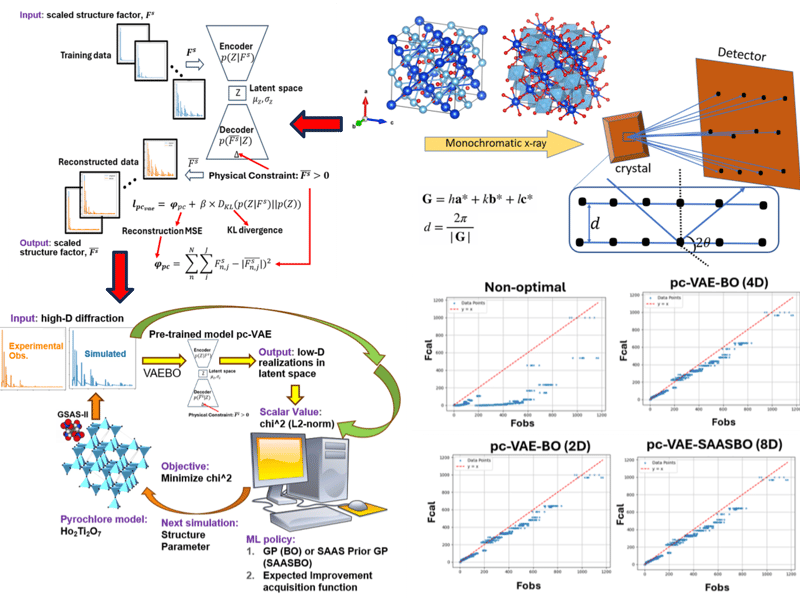
Physically constrained autoencoder-assisted Bayesian optimization for refinement of high-dimensional defect-sensitive single crystalline structure
Here, the NSF MRSEC team at the University of Tennessee, Knoxville presents a hybrid machine learning (ML) framework that integrates a physically constrained variational autoencoder (pc-VAE) with different Bayesian optimization (BO) methods to systematically accelerate and improve crystal structure refinement, from traditional least-square based refinement, with resolution of defects.
Jun 8, 2026
University of Pennsylvania
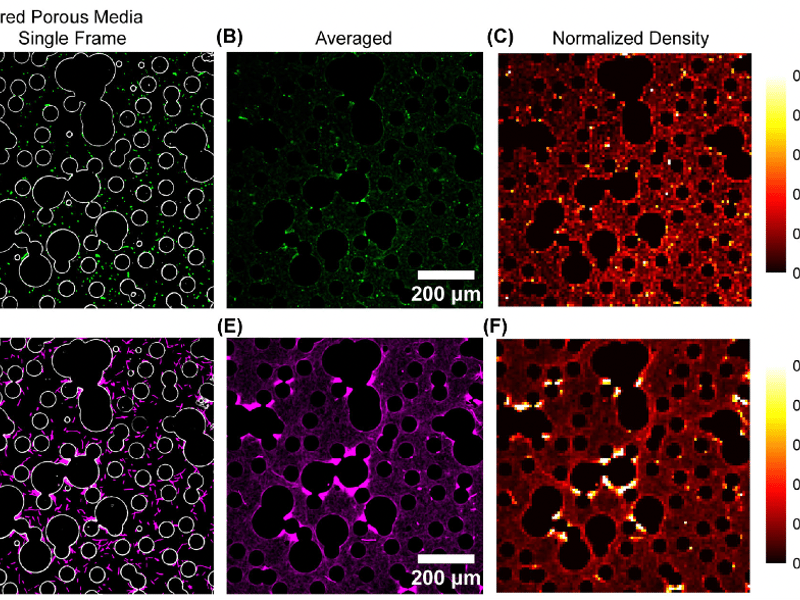
Bacterial Cell Length Sets Who Gets Through and Who Gets Stuck in a Porous Maze
Arnold J. T. M. Mathijssen and Ran Tao, University of Pennsylvani
Penn MRSEC Seed researchers Mathijssen and Tao showed that the length of a swimming bacterium and the geometry of the porous environment around it jointly determine whether the cell traverses or becomes trapped, and used that coupling to propose a passive physical mechanism for sorting antimicrobial-resistant bacteria from drug-affected ones.
Jun 8, 2026
University of Pennsylvania
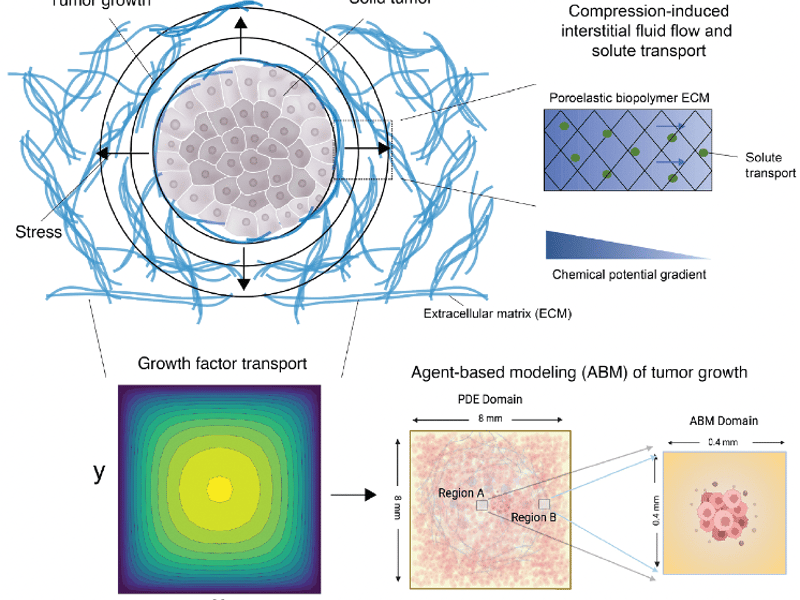
Fluid Squeezed Through a Tumor's Matrix Shapes How It Grows: A Poroelastic Multiscale Model
Kyle Vining, Prashant K. Purohit, Paul Janmey, University of Pennsylvania
Penn MRSEC Seed researchers Vining and Purohit, with Radhakrishnan, showed that under large compressive strains characteristic of growing tumors, water flow through the porous extracellular matrix dominates stress relaxation, alters growth-factor transport, and reshapes how a tumor proliferates over physiological timescales.
Jun 8, 2026
University of Pennsylvania
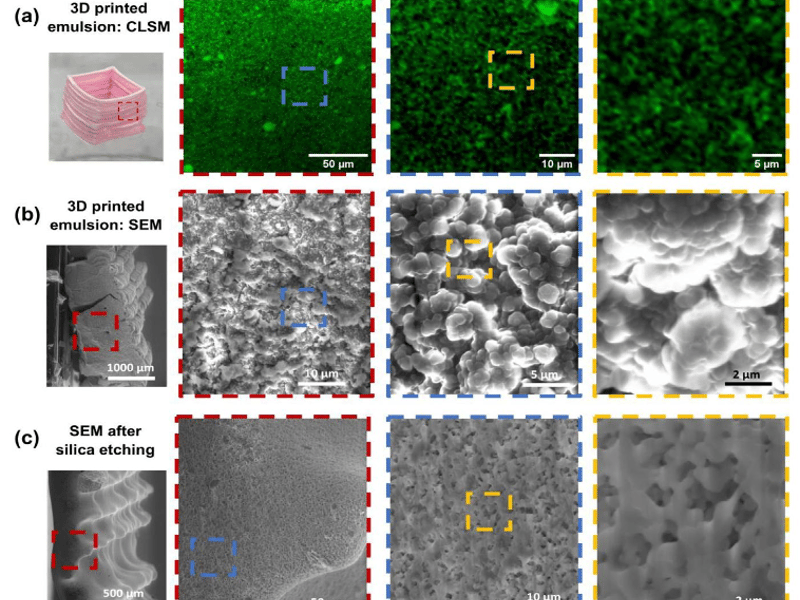
3D Printing Interpenetrating Polymer–Pore Networks: Bicontinuous Emulsion Gels in Arbitrary Shapes
Kathleen Stebe and Daeyeon Lee, University of Pennsylvania
Penn MRSEC researchers Stebe and Lee developed a 3D-printable ink that, after extrusion, spontaneously phase-separates into a bicontinuous oil-water emulsion stabilized by fumed silica nanoparticles, locking in two interpenetrating channels with sub-micron domains while the printed object holds an arbitrary centimeter-scale shape.
Jun 8, 2026
University of Pennsylvania
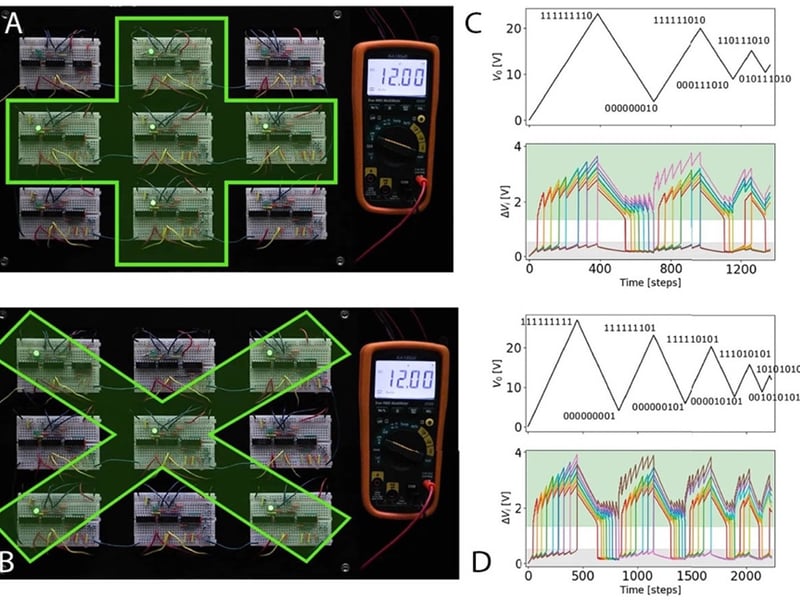
Tunable Bistable Networks: A Programmable Platform for Flow-Network Memory
Douglas Durian and Eleni Katifori, University of Pennsylvania
Penn MRSEC researchers Durian and Katifori built a network of custom bistable electronic elements whose pattern of edge voltages records the history of how the network was driven, inspired by the multistable flow behavior seen in plant vasculature.
Jun 8, 2026
University of Pennsylvania
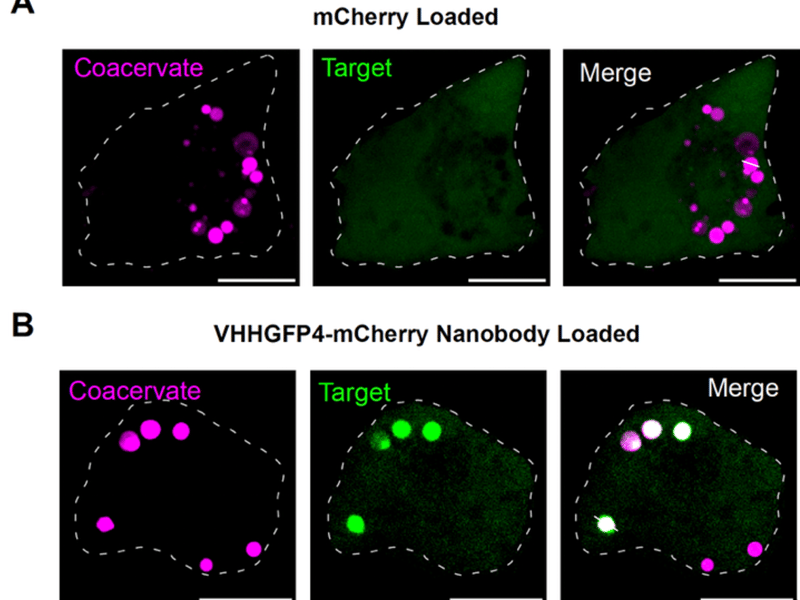
Designer Peptide Coacervates Delivered to Cells Act as Synthetic Interaction Hubs and Degradosomes
Matthew Good, David Chenoweth, and Amish Patel, University of Pennsylvania
Penn MRSEC researchers Good, Chenoweth, and Patel designed short disordered peptides that assemble into stable, gel-phase coacervate particles, loaded them with proteins of interest, and delivered them into living cells without any gene transfer, where the particles act as designer biochemical compartments that capture and degrade native target proteins.
Jun 8, 2026
University of Pennsylvania
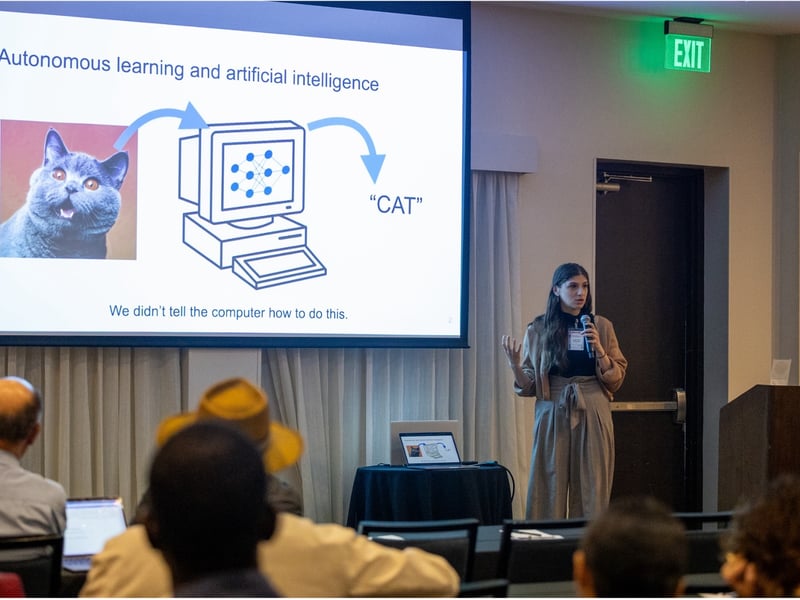
PREM + Penn NRT: Partnership in Artificial Intelligence & Autonomous Experimentation
Ashley Wallace, Chinedum Osuji, Eric Stach, University of Pennsylvania Idalia Ramos, University of Puerto Rico, Humacao
The 13th Annual PREM Symposium took place in San Juan, PR and focused on artificial intelligence and autonomous experimentation. The day consisted of 5 talks from Penn PD/GS and 33 poster presentations from UPR students, which served as an opportunity for presenters to not only further develop their science communication skills but to also provide participant with a platform to showcase the amazing work being conducted within the collaboration.
Jun 8, 2026
University of Pennsylvania
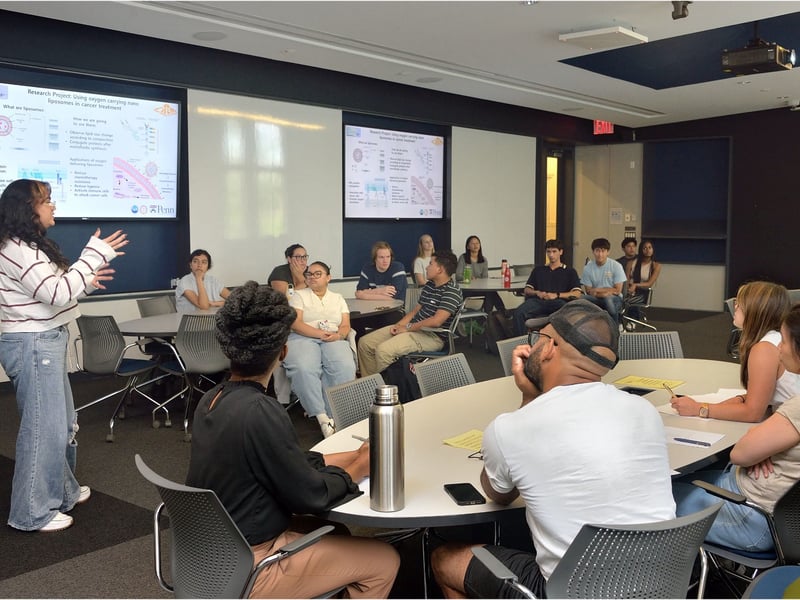
REU: Cross-Institutional Summer Research Showcase
Mark Licurse & Ashley Wallace, University of Pennsylvania
In a collaborative effort between the University of Pennsylvania MRSEC (LRSM), the University of Delaware MRSEC (CHARM), and the University of Delaware Energy Frontier Research Center (CPI), 36 summer undergraduate research scholars engaged in a day designed to encourage connection and science exploration through shared experiences across MRSECs.
Jun 8, 2026
University of Pennsylvania
Fibrin Networks as Mechanoresponsive Substrates: Strain Tunes Both Crosslinking and Breakdown
Paul Janmey, University of Pennsylvania
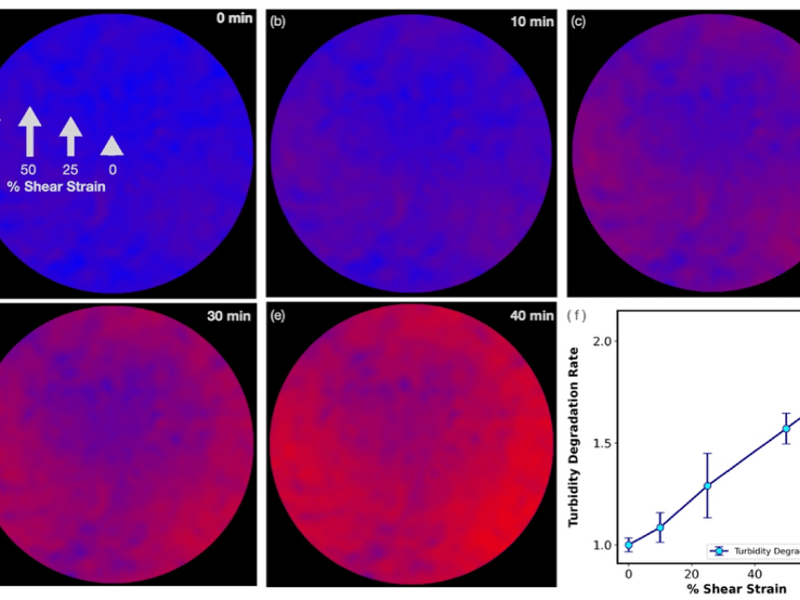
Penn MRSEC researcher Janmey and colleagues showed that mechanical shear strain on fibrin gels — the protein scaffolding that holds a blood clot together — speeds up both of fibrin's natural remodeling enzymes: Factor XIIIa, which covalently crosslinks the fibers, and plasmin, which proteolytically degrades them.
Jun 1, 2026
University of Wisconsin - Madison
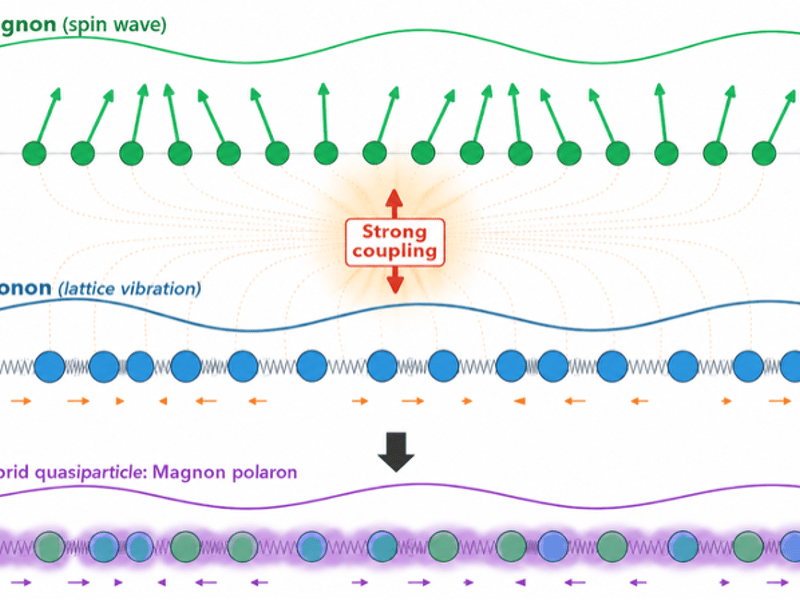
Efficient method for computing magnon-phonon coupling from first-principles
Yuan Ping, University of Wisconsin-Madison
Spin waves called magnons are an emerging way to carry information with far less energy than today’s electronics and to link qubits in future quantum technologies. How long that information survives is limited by the spin waves’ coupling to atomic vibrations, especially at room temperature.
Showing 1 to 10 of 1452