Highlights
May 30, 2018
Yale University
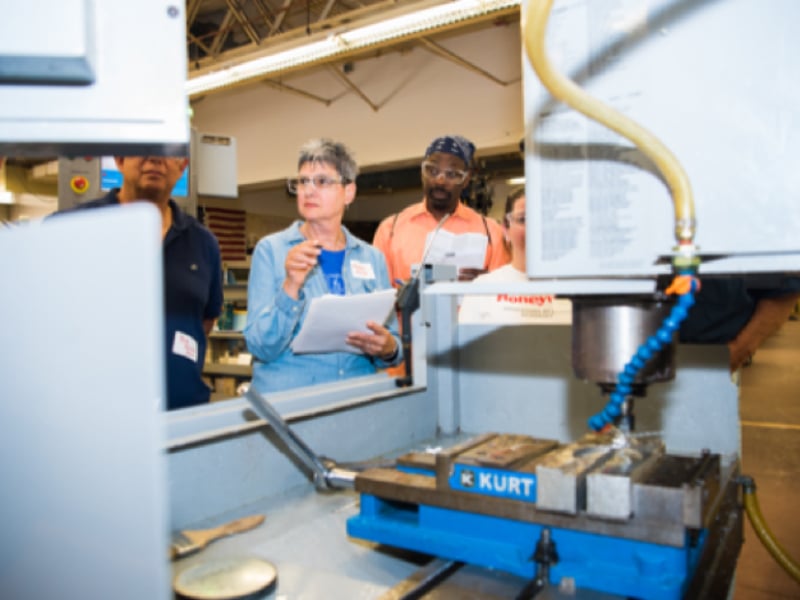
Materials & Manufacturing Summer Teachers’ Institute (MMSTI)
Center for Research on Interface Structures and Phenomena, Yale University & Southern Connecticut State University
The Materials and Manufacturing Summer Teachers’ Institute is a school-to-career initiative that targets STEM skills instruction for grades 7-12 in the New Haven and Bridgeport Public Schools.
Three-day workshop designed to:
May 25, 2018
University of Minnesota - Twin Cities
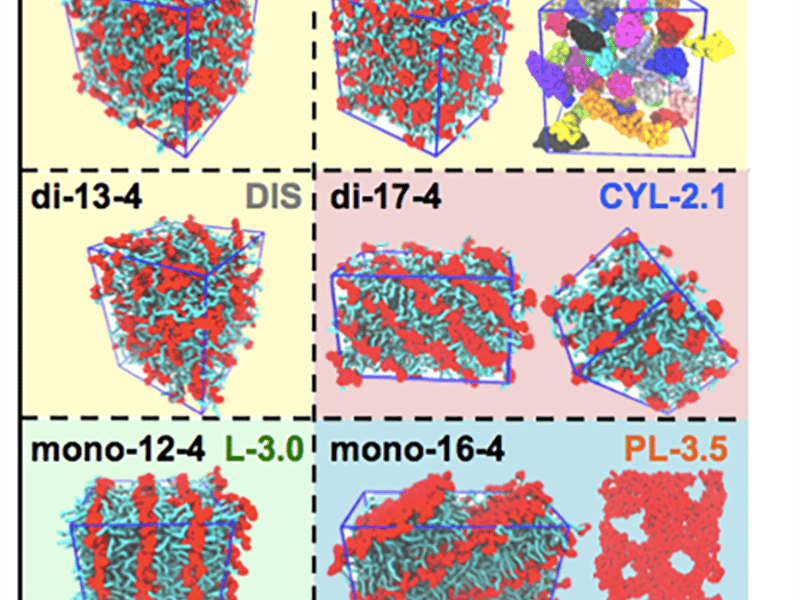
Computational Design of High-χ Block Oligomers for Accessing 1-nm Features
Marc Hillmyer, Timothy Lodge, Ilja Siepmann University of Minnesota
The ability to precisely predict how molecular structure influences the microstructure of polymeric materials is the key towards the custom tailoring of desirable materials properties. Molecular dynamics simulations with atomistic level models were performed to design “high-χ” block oligomers that can self-assemble into 1-5 nm domains for next generation microelectronics applications. Simulations show that the microstructures formed by these oligomers can be tuned by varying the molecular weight and the chain architecture.
May 24, 2018
University of Minnesota - Twin Cities
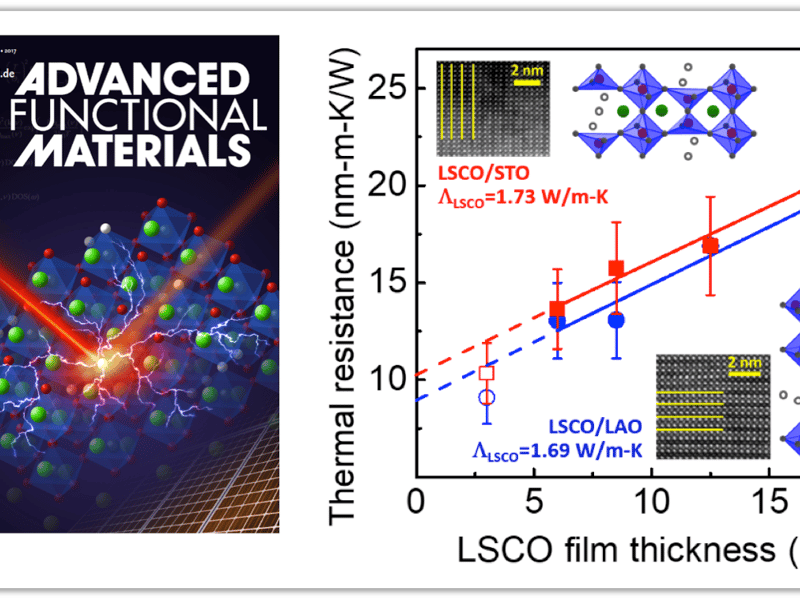
Glass-like Thermal Conductivity in Epitaxial Oxygen-Vacancy-Ordered Oxide Films
Xiaojia Wang, Chris Leighton University of Minnesota
Precise control over defects in materials is often a highly effective means to control properties and function. In oxide materials, which are the focus of enormous current attention for many existing and proposed applications, defects known as oxygen vacancies often play the key role. These vacancies, simply missing oxygen atoms in the structure, can have a significant impact on properties.
May 22, 2018
University of Wisconsin - Madison
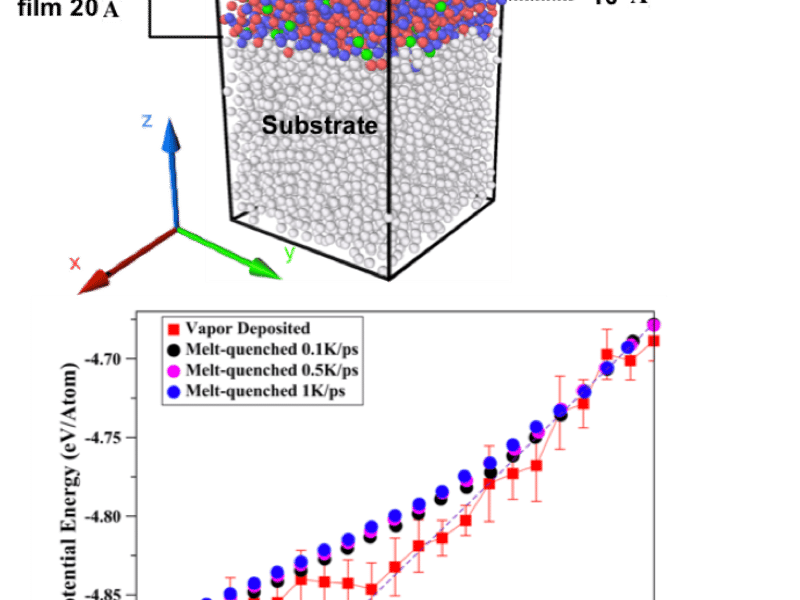
IRG1: Increased Stability of CuZrAl Metallic Glasses Prepared by Physical Vapor Deposition
George B. Bokas and Izabela Szlufarska, University of Wisconsin-Madison MRSEC
One of the main drawbacks of metallic glasses is their low thermodynamic stability, which limits their formability and service life. Recently, experiments by members of the Wisconsin MRSEC showed that organic glasses with high thermodynamic stability can be synthesized via physical vapor deposition (PVD) onto a substrate at a controlled temperature. Now, this team of researchers has used molecular dynamics simulations to predict that the same PVD methods can enhance the stability of metallic glasses.
May 22, 2018
University of Wisconsin - Madison
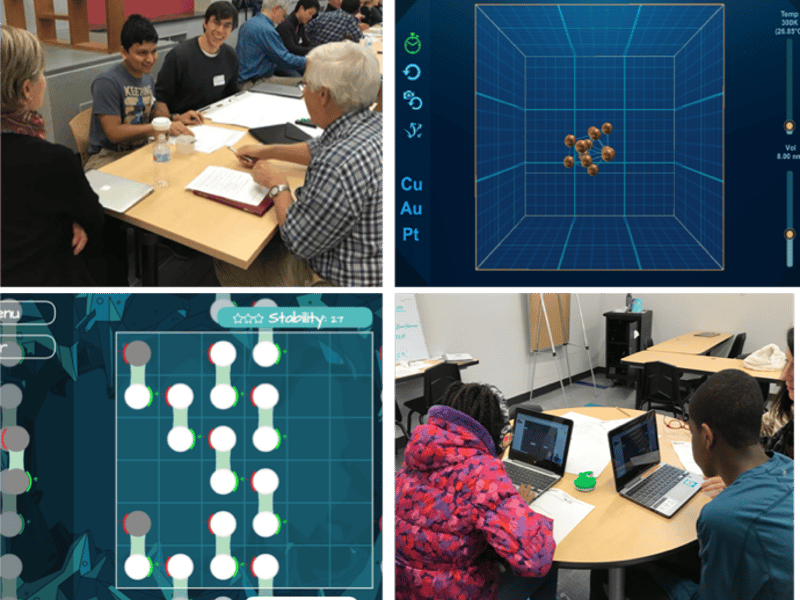
Wisconsin MRSEC Researchers and Teachers Collaborate to Create Digital Educational Games
Anne Lynn Gillian-Daniel, University of Wisconsin-Madison MRSEC
The Wisconsin MRSEC has developed research-inspired educational digital games that are each being played over 1900 times/week. Atom Touch teaches students about atom behavior, bonding, and forces. Crystal Cave lets students explore how molecules form repeating patterns to grow into large crystals. During development, local K-12 teachers provided input on how to make the games more engaging for student learning.
May 18, 2018
New York University
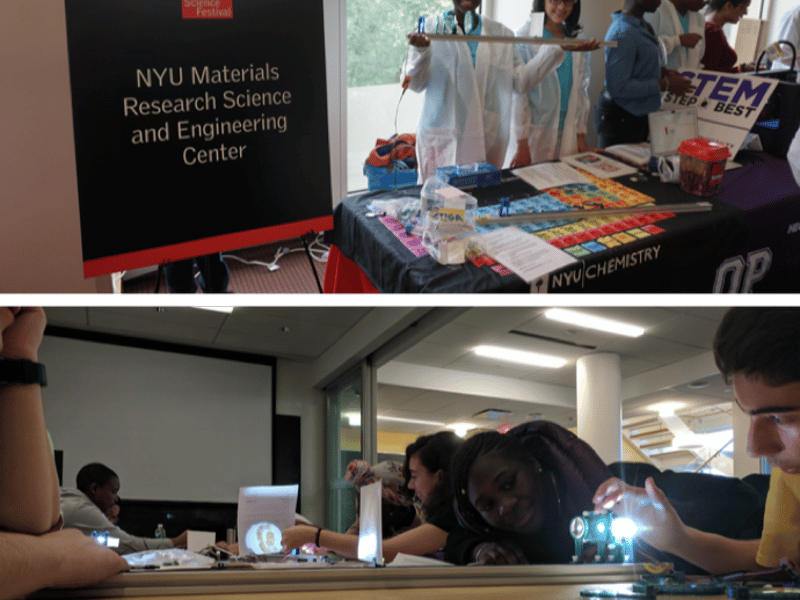
World Science Festival: Crystals, Colloids and Fun!
NYU-MRSEC investigators along with research scientist from the BioBus/BioBase organization mentored nine high school students as part of a two month peer-mentorship program. The idea, to train high school students in optics, CAD/3D printing and basic of microscopy including applications in materials science (crystals and colloids).

May 18, 2018
New York University
Phases of Matter – Adult Coloring Book
NSF MRSEC investigators team-up to create an adult coloring book. The coloring book, “Phases of Matter,” designed to help the general pubic understand physics and phase behavior.
May 18, 2018
New York University
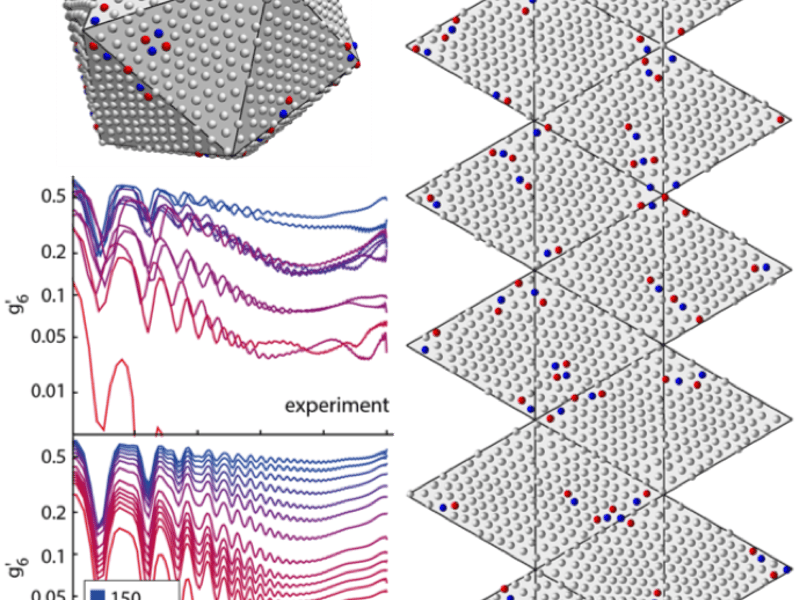
Freezing on a Sphere
Andrew D. Hollingsworth & Paul M. Chaikin, New York University
A crystal is defined by the regular and periodic ordering of the atoms, molecules, or particles that compose them. If bent or strained, this order and regularity is disturbed, and defects appear that relieve some of the applied stress.
May 17, 2018
University of California, Santa Barbara
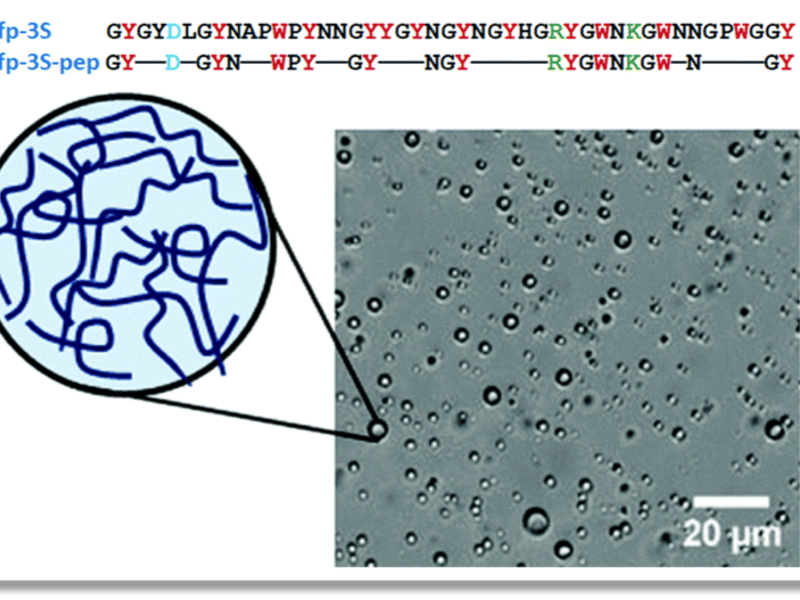
Simple Coacervation of a Mussel-inspired Peptide Improves Wet Adhesion
Upon spontaneous deposition on surfaces underwater and moderate compression, single-component coacervates of adhesive peptide mimics (mfp-3S-pep) display orders of magnitude improvement compared with un-coacervated native (mfp-3S) or synthetic peptides. The increase in the work of adhesion is due to the peptide’s intrinsic cohesive properties upon coacervation correlated with dehydration, tight peptide packing and restricted peptide mobility.
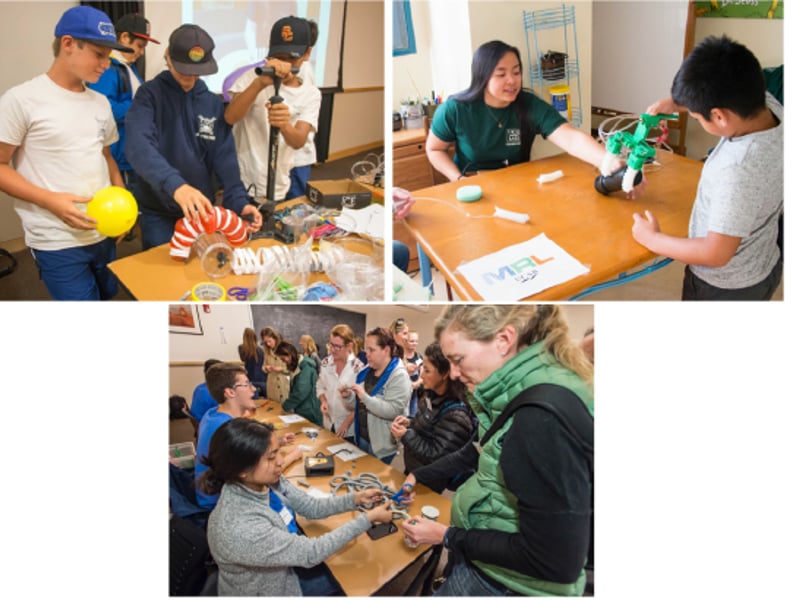
May 17, 2018
University of California, Santa Barbara
UCSB MRSEC Maker Activities
In response to the needs of teachers, the UCSB MRSEC has placed a new focus on the development of maker activities for K-12 students. These encourage the integration of maker activities into the school curriculum as well as within out-of-school environments (Maker Faires), supporting the adoption of Next Generation Science Standards (NGSS).
Showing 451 to 460 of 1452