NSF MRSEC News

Sep 19, 2017
U.S. National Science Foundation Announces New Awards for Materials Science and Engineering Centers
The National Science Foundation has awarded funding to eight Materials Research Science and Engineering Centers (MRSECs) for transdisciplinary work that covers all areas of materials science and helps foster collaborations on a national and international level. These six-year awards represent a significant new investment in material science exceeding $145M.

Jul 20, 2017
A New Spin on Nanotechnology
Some cotton candy machines can do more than simply satisfy a sweet tooth. Researchers at Harvard and Vanderbilt University have discovered a way for the machines to spin new fibers that could potentially contribute to life-saving technologies such as regrowing human tissue or inventing lighter bullet proof vests. Learn more about this revolutionary U.S. National Science Foundation-funded research.

May 4, 2017
Physicists Share Ideas at APS Spring Meeting
At the recent American Physics Society meeting, MRSEC center directors and other representatives discussed new and improved opportunities in the field. The March meeting, which was held in New Orleans, brought together thousands of experienced and aspiring scientists looking to learn about the latest scientific research from industry and universities. Meeting highlights included a plenary on science policy in the 21st century, discussions on polymer opportunities across NSF, and poster sessions highlighting ongoing research.
Apr 25, 2017
DMR's Newsletter Highlights Research and Initiatives
The Division of Materials Research has a new newsletter, which highlights the department's ongoing events, activities, and research. Hear from DMR Director Linda Sapochak on the department's mission, read about the National Strategic Computing Initiative, get the latest on DMR's partnership building opportunities, and more. Check out the inaugural issue.
Dec 30, 2016
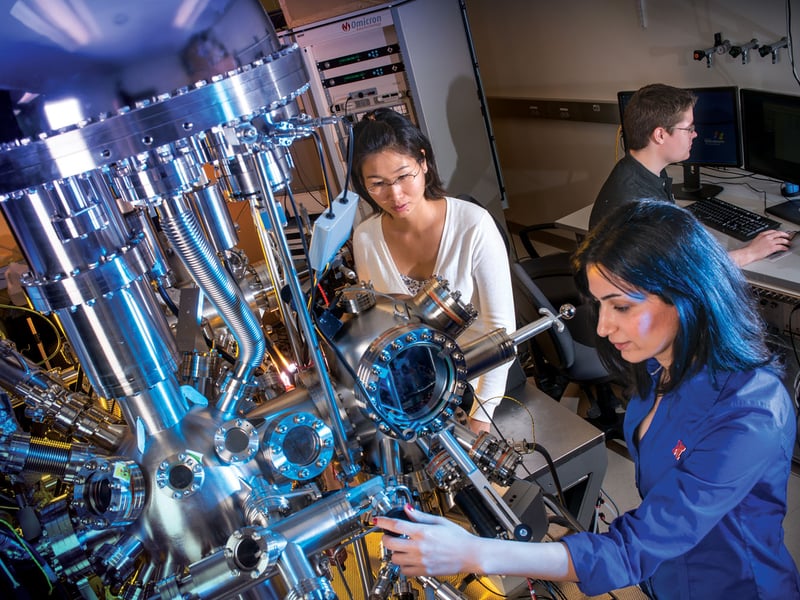
A Collective Collaboration
How NSF’s decades-long materials science program has fostered partnerships across scientific fields.
Oct 25, 2016
Unusual quantum liquid on crystal surface could inspire future electronics
For the first time, an experiment has directly imaged electron orbits in a high-magnetic field, illuminating an unusual collective behavior in electrons and suggesting new ways of manipulating the charged particles.
Oct 13, 2016
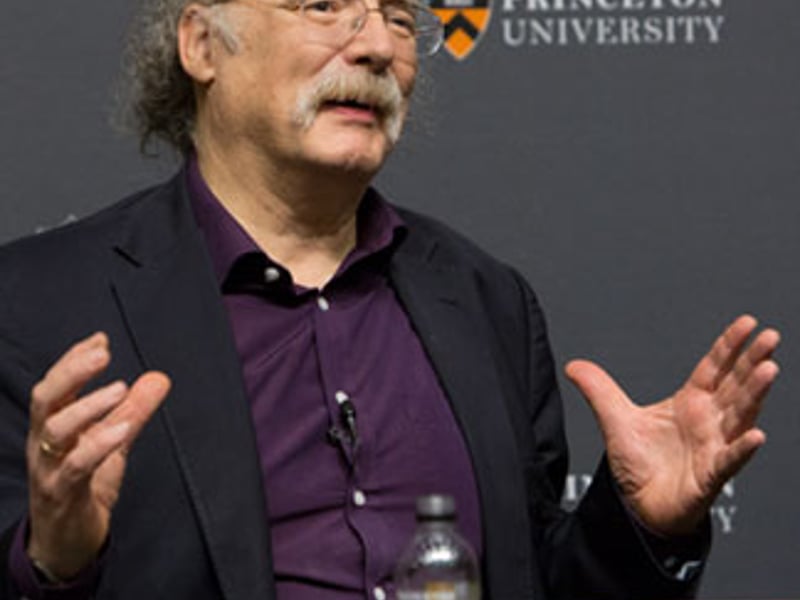
Princeton's F. Duncan Haldane receives Nobel Prize in Physics
Princeton University professor F. Duncan Haldane has been awarded the 2016 Nobel Prize in Physics "for theoretical discoveries of topological phase transitions and topological phases of matter." He shares the prize with David Thouless of the University of Washington and J. Michael Kosterlitz of Brown University. Haldane is the Eugene Higgins Professor of Physics and an IRG-1 senior investigator at the Princeton Center for Complex Materials.
Sep 24, 2015
Investing in diversity - material science partnership awards broaden participation, strengthen research
With an eye toward improving material science through increased diverse perspectives, the U.S. National Science Foundation (NSF) awarded six Partnerships for Research and Education in Materials (PREM) awards this year, in its fifth such competition since 2004.
Whether they focus on new laser treatments that may better target cancer cells, or on exploring new materials that could lead to sustainable energy alternatives, PREM awards couple the expertise of NSF Materials Research Science and Engineering Centers (MRSEC) with minority-serving colleges and universities to involve those students in some of the nation's preeminent materials research.
Feb 15, 2015
Funding cutting-edge, collaborative research
U.S. National Science Foundation today announced awards for 12 Materials Research Science and Engineering Centers (MRSECs) for multidisciplinary work that covers all areas of material science, fostering active university, national laboratory, industrial and international collaboration with integral multidisciplinary education and outreach. MRSECs receive $56 million in NSF funding.
Oct 10, 2013
White House names UW-Madison a partner institution in Materials Genome Initiate, NSF MRSEC Faculty Co-Direct Wisconsin Materials Innovation Institute
On June 24, 2013, the White House named UW-Madison a partner institution in its Materials Genome Initiative for Global Competitiveness, a national effort to double the speed with which the country discovers, develops and manufactures new materials.
Showing 51 to 60 of 75