Highlights
May 7, 2019
Northwestern University
Joint Undertaking for an African Materials Institute (JUAMI)
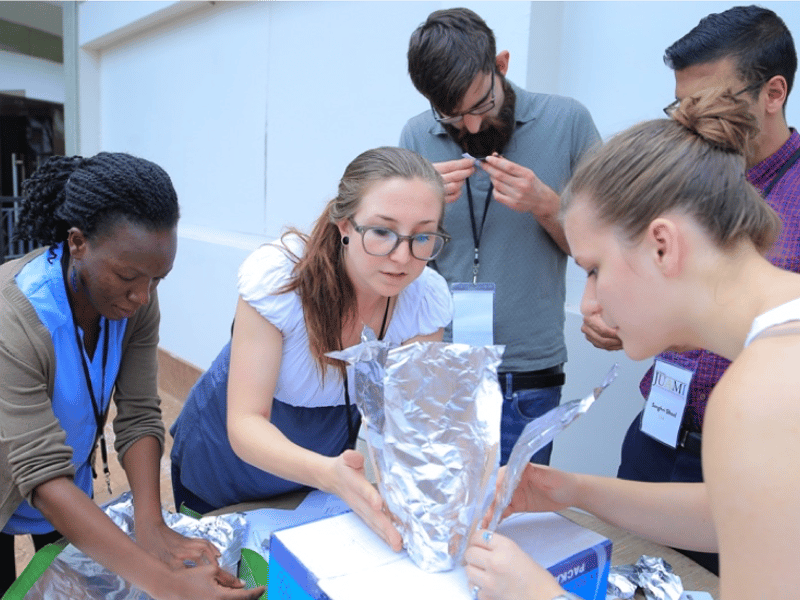
The NU-MRSEC has supported Joint Undertaking for an African Materials Institute (JUAMI), which is the largely U.S. National Science Foundation-funded program aimed at fostering connections between young researchers in the US and those in Eastern Africa.
May 7, 2019
Northwestern University
Research Experience for Undergraduates Plus (REU+)
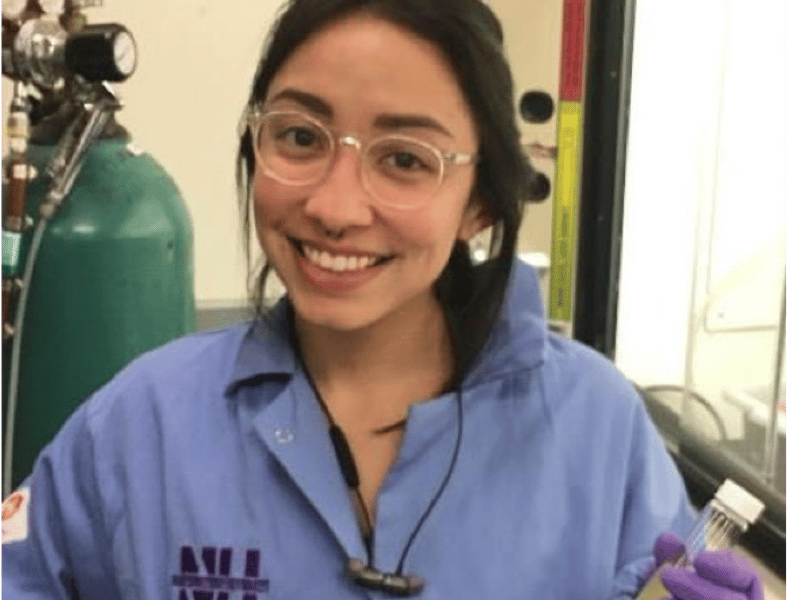
The new NU-MRSEC REU+ Program enables select REU participants from small colleges to follow their summer experience with an academic quarter at Northwestern University as domestic exchange students, thereby allowing them to experience the rigor of an R1 university in a nurturing environment. REU+ students take classes and also continue their research for an additional ten weeks.
May 7, 2019
Northwestern University
Materials Science Exhibit at the Chicago Public Library
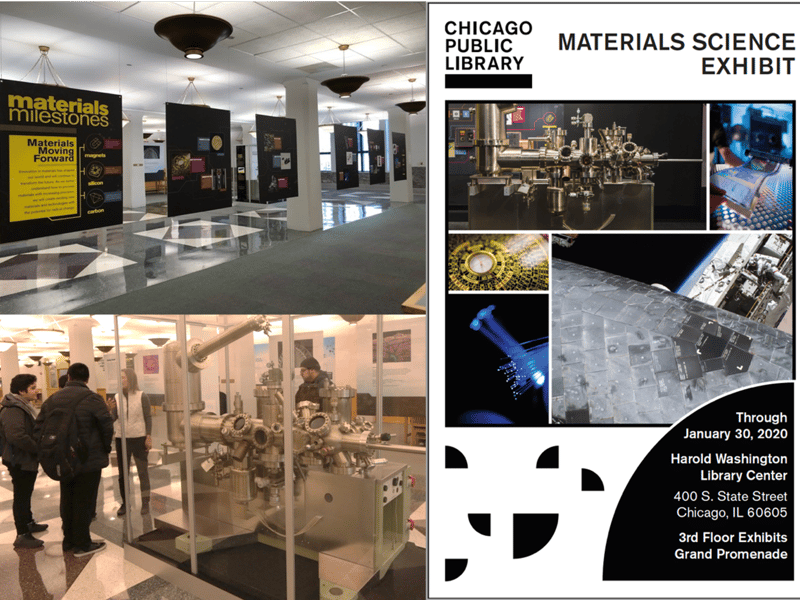
In collaboration with the Chicago Museum of Science and Industry and the Chicago Public Library, the NU-MRSEC launched the Materials Science Exhibit at the Harold Washington Library in downtown Chicago.
May 7, 2019
Northwestern University
Designing Biomaterials Using High-Throughput Directed Evolution
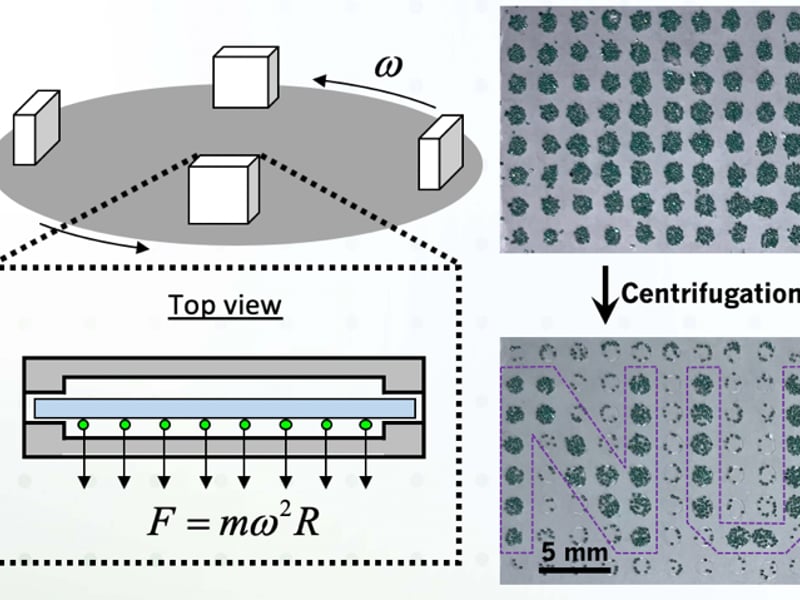
Traditional design approaches are insufficient for exploring the vast phase space available to protein-based biomaterials. This NU-MRSEC seed-funded project is developing a platform for biomaterials design using directed evolution, which combines genetic mutation and protein synthesis with high-throughput materials characterization.
May 7, 2019
Northwestern University
Processing 2D Porous Polymers into Membranes via Exfoliation
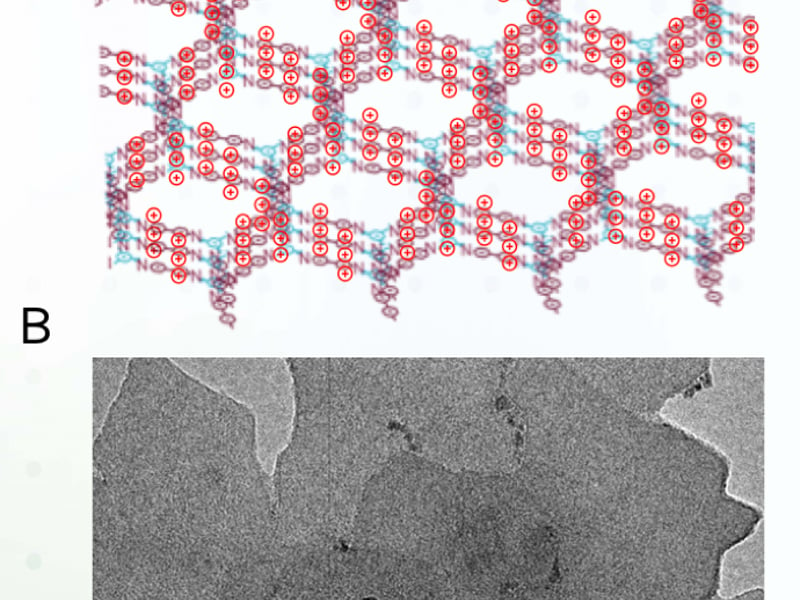
The NU-MRSEC Super-Seed team has developed a method to process imine-linked 2D COF powders into thin films via reversible exfoliation. The COF powder is treated with strong acids, which causes each layer to become positively charged. This charged form is exfoliated in solvents with gentle sonication, which provides a suspension of nanosheets.
May 7, 2019
Northwestern University
Photoluminescence and Antiferromagnetism in the New Heteroanionic Material BaFMn0.5Te
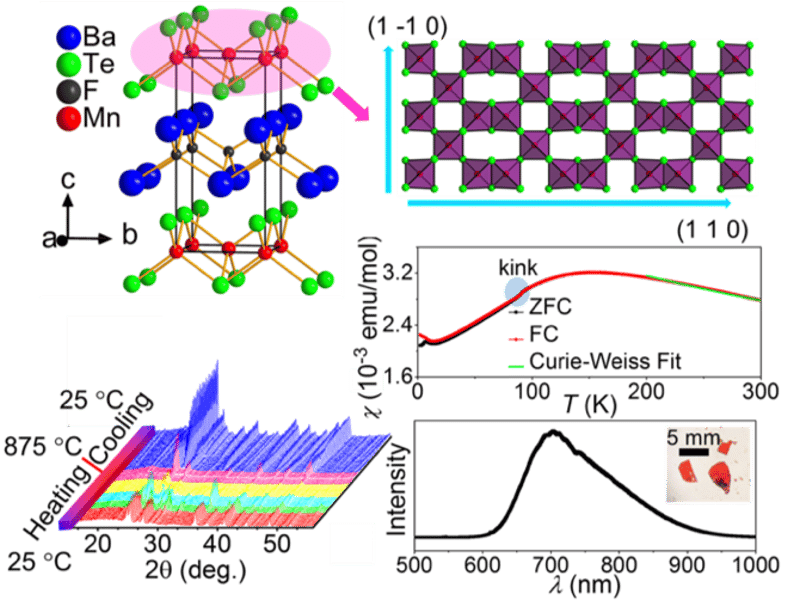
Semiconductors with both magnetic and optoelectronic properties are relevant for novel spintronic devices. With the aim of discovering new magnetic semiconductors, NU-MRSEC IRG-2 performed synthesis investigations on mixed halide-chalcogenides, resulting in the discovery of the new compound BaFMn0.5Te.
May 6, 2019
University of Pennsylvania
UPenn Program with Southern Africa
Mark Licurse & Ashley Wallace. University of Pennsylvania
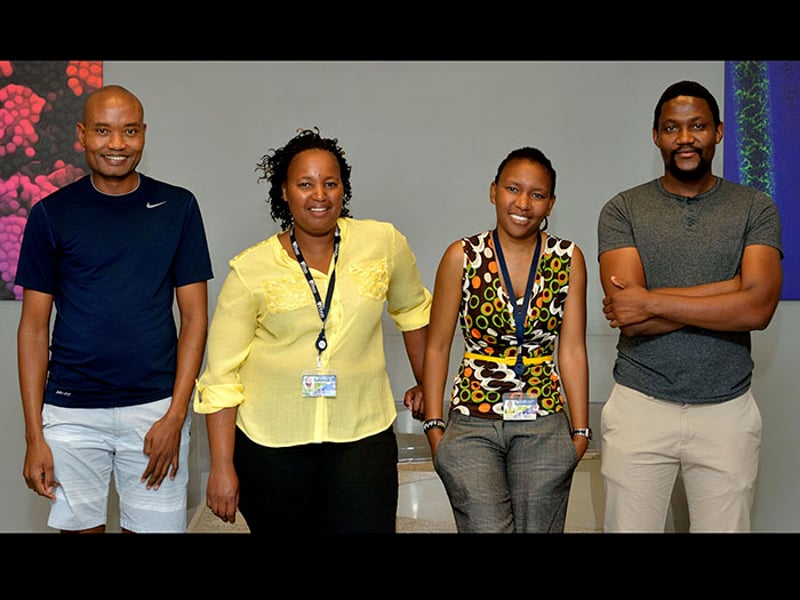
Since 2003 we have successfully partnered with universities in Southern Africa, specifically the National University of Lesotho and the University of Pretoria, to bring faculty members to the LRSM every summer to participate in collaborative research projects with our faculty. Often the students of faculty members are invited to join as well to gain research experience. This was the case with Mopeli Fabiane (top picture), who originally came as a lecturer, then a graduate student, and now continues to visit as a researcher with his Ph.D. The program started with 2-3 faculty/students visiting each summer and now this summer, 2019, will support 7 visitors (6 faculty and 1 student).
May 6, 2019
University of Pennsylvania
Membraneless Organelles Build from Engineered Assemblies of Intrinsically Disordered Proteins
Matthew Good, Daniel Hammer & Elizabeth Rhoades, University of Pennsylvania
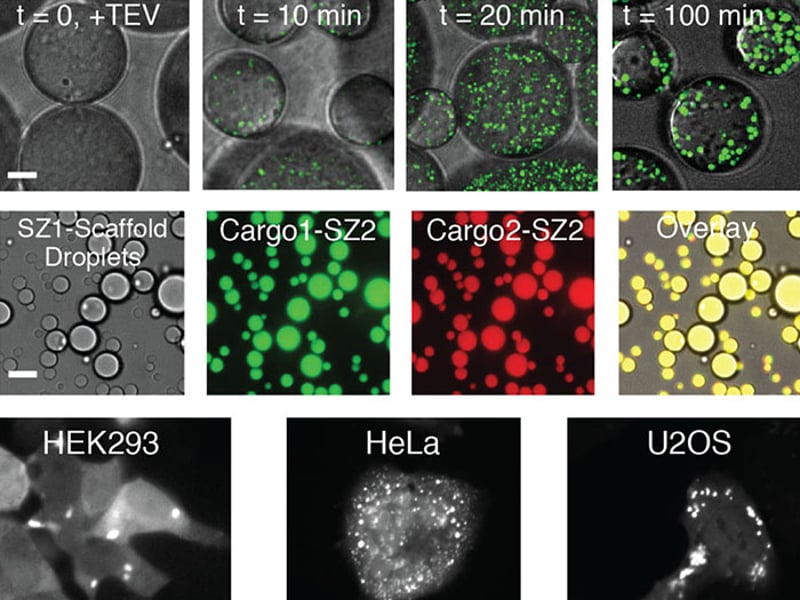
Our team designed a protein-based RGG material capable of self-assembly into micron size condensates that can be genetically encoded and expressed to form membranelles organelles in living cells. RGG is an intrinsically disordered peptide that coacervates to form a dynamic protein phase through weak, multivalent interactions. We leveraged this principle to designed RGG variants whose assembly could be enzymatically regulated through protease-mediated control of valency and solubility.
May 6, 2019
University of Pennsylvania
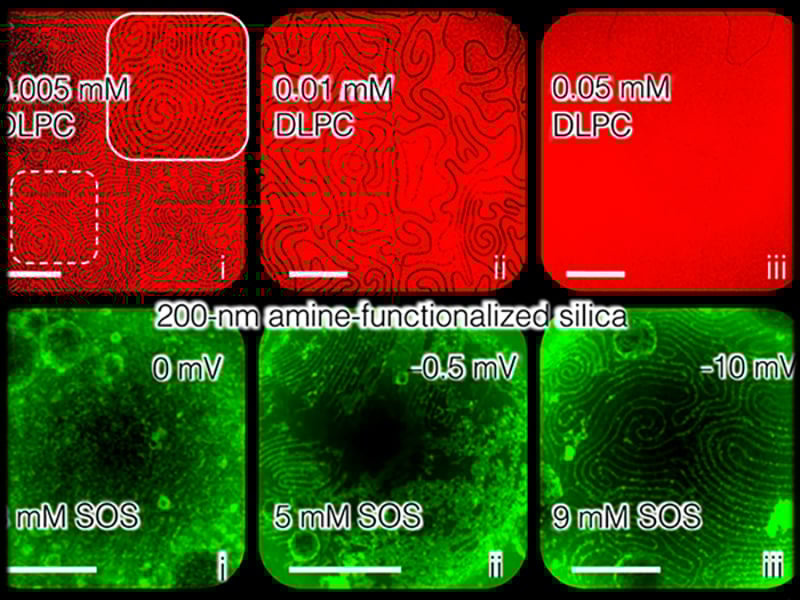
Shaping Nanoparticle Fingerprints at the Interface of Cholesteric Droplets
Shu Yang, Kathleen Stebe & Randall Kamien, University of Pennsylvania
This work reports the first experimental realization of nanoparticles templated at the interface of liquid crystals into reconfigurable, periodic structures. We establish that nanoparticles can segregate into highly ordered stripes, with tunable organization and thickness, forming the basis for the assembly of patchy colloids and nanowires. Our technique is advantageous over other methods, as the resultant assemblies can dynamically respond to changes within the underlying liquid crystal.
May 6, 2019
University of Pennsylvania
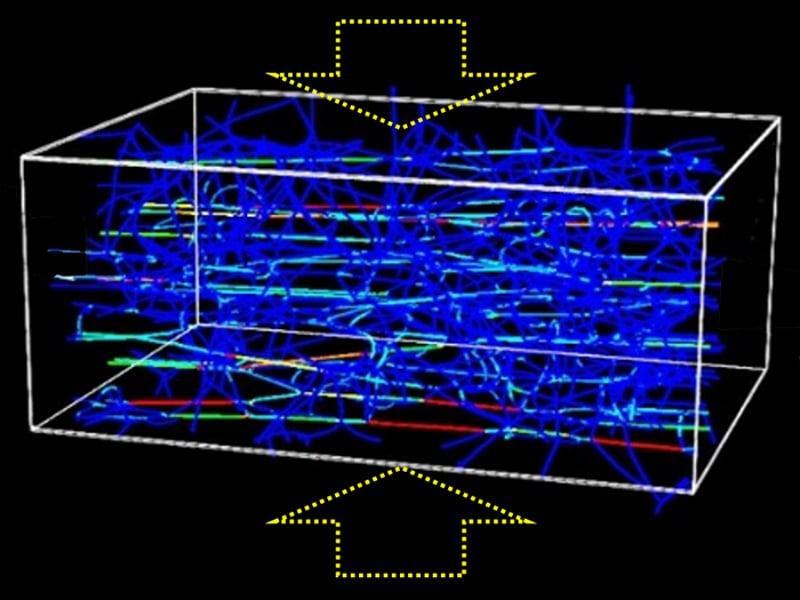
Structural Chemo-Mechanics of Fibrous Networks
Ehsan Ban, Paul Janmey, Vivek Shenoy, University of Pennsylvania
Shenoy group in the IRG led a study on the multiaxial behavior of collagen networks. When stretched, the network models exhibited drastic contractions transverse to the direction of loading (yellow arrows in the top left image). The networks exhibited an anomalous Poisson effect, with apparent Poisson’s ratios larger than 1. Experiments validated this result and showed increases of apparent Poisson’s ratio with decreasing collagen concentration (top right image).
Showing 391 to 400 of 1452